
Removing Outdated Wainscoting or Paneling? Here's What Your Walls Need Next
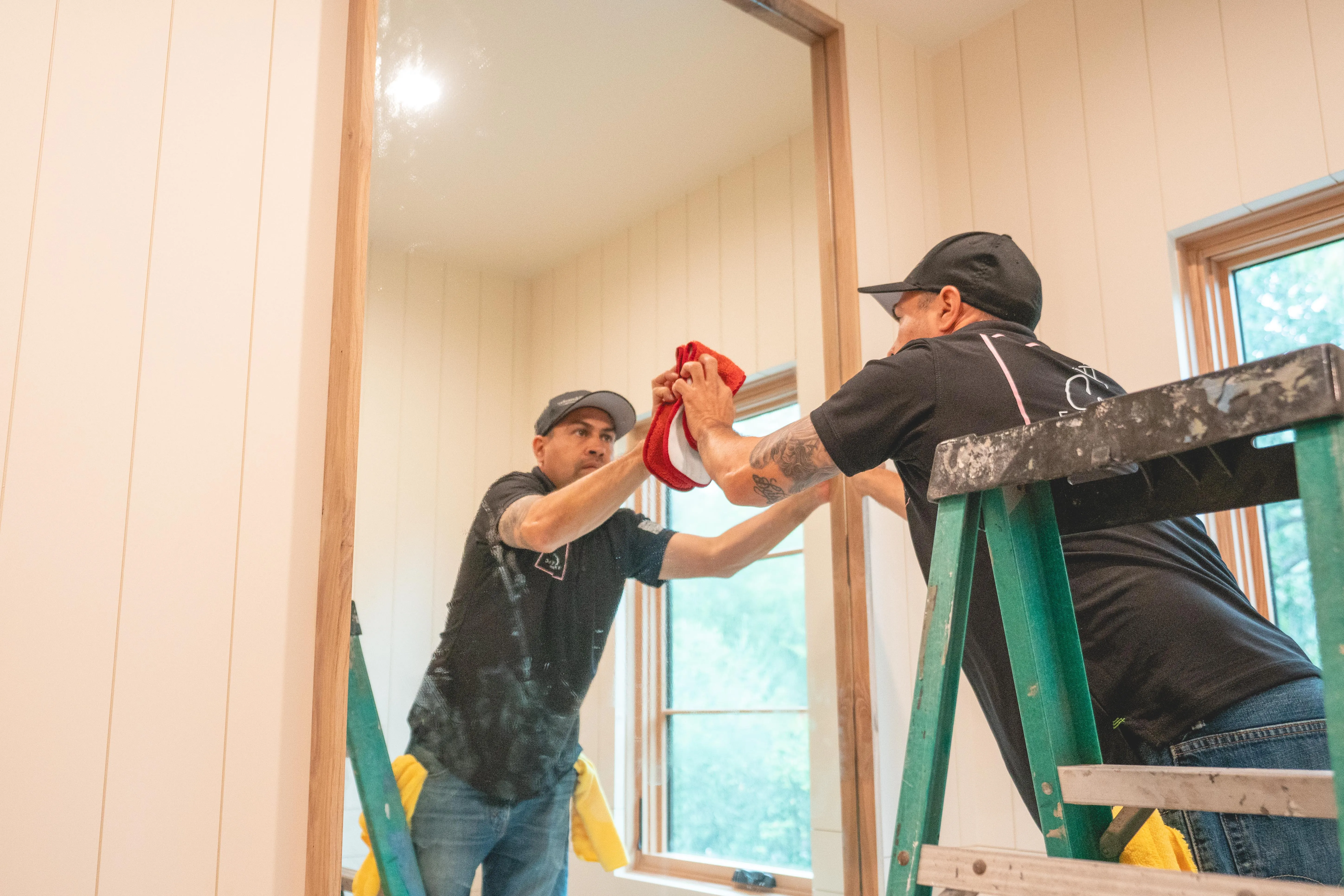
Wood paneling and wainscoting were common features in many DFW homes built decades ago, and while some homeowners choose to preserve and refresh these features, others prefer to remove them entirely in favor of a more contemporary, smooth-walled look. What's often underestimated is the amount of drywall repair needed once that paneling comes down, since it was frequently installed with adhesive, nails, or furring strips that can significantly damage the wall surface underneath.
Why Paneling Removal Often Damages the Underlying Wall
Wood paneling was commonly installed using construction adhesive directly against drywall, or attached over furring strips nailed through the drywall into wall studs. Removing paneling installed this way often pulls away sections of the drywall's paper facing, leaves behind adhesive residue, or leaves numerous nail holes from the furring strip attachment points.
Common Issues Found After Removing Paneling or Wainscoting
Adhesive Residue
Construction adhesive used to install paneling directly to drywall often leaves behind a rough, uneven residue that interferes with proper paint adhesion if not fully addressed.
Torn Drywall Surface
In areas where adhesive bonded particularly strongly, removal can tear away portions of the drywall's paper facing, leaving a rough, unpaintable surface without repair.
Numerous Nail or Staple Holes
Furring strips and paneling itself were often secured with a significant number of nails or staples, leaving a scattered pattern of small holes across the entire wall surface.
Uneven Wall Surface
Walls that had furring strips installed sometimes have a slightly uneven surface once paneling is removed, particularly if the furring strips themselves aren't also removed.
The Repair Process After Paneling Removal
1. Removing Remaining Furring Strips or Adhesive
Any leftover furring strips, adhesive residue, or hardware needs to be fully removed before wall repair can begin.
2. Assessing the Extent of Damage
Determining whether the wall needs targeted patching for scattered holes, or a full skim coat to address more extensive surface damage.
3. Patching Nail and Staple Holes
For walls with numerous small holes, joint compound is applied and sanded to fill and smooth each individual point of damage.
4. Skim Coating for Extensive Damage
For walls with significant adhesive residue or torn drywall facing across large areas, a full skim coat often provides a more efficient, uniform result than trying to patch each individual imperfection.
5. Texture Application (If Needed)
Depending on whether the wall needs to match texture elsewhere in the home, texture is applied and blended, or a smooth finish is achieved through proper skim coating.
6. Priming and Painting
A quality primer, particularly one suited to sealing any remaining adhesive residue, ensures proper paint adhesion and a clean final finish.
Why Skipping Proper Repair Leads to Poor Results
Painting directly over adhesive residue, torn drywall facing, or unpatched nail holes typically results in an uneven, bumpy, or unattractive finish that undermines the entire purpose of removing outdated paneling in the first place.
Considering the Full Scope Before Starting Demolition
Homeowners planning to remove paneling or wainscoting should factor in the drywall repair work involved from the start, since this repair phase is often more time-consuming and involved than the demolition itself.
Preserving Wainscoting Instead of Removing It
For homeowners uncertain about full removal, refreshing existing wainscoting with new paint can sometimes achieve an updated look while avoiding the repair work involved in full removal — worth considering as an alternative approach depending on the wainscoting's condition and style.
Why Professional Repair Delivers a Better Foundation
Because paneling and wainscoting removal damage varies significantly based on how the original material was installed, professional assessment and repair ensures the right approach — targeted patching or full skim coating — for your specific wall condition.
Modernizing Your Space With a Proper Foundation
Removing outdated paneling or wainscoting is often the right first step toward a more contemporary look, but the real transformation depends on properly repairing and preparing the wall surface underneath for fresh paint.

Removed paneling and need your walls repaired? Request your free estimate today.
KC10 Remodels
Find Us On


